Day Guiding Blog March 2026

March has been an amazing month to see wildlife and there are so many highlights to choose from. Earlier in the month, I led a day guide that started in Carrbridge and I took the guests to look for Black Grouse. We had initially said we would start at 8am, but after an initial visit to one of the lek sites and not finding anything, I began to have my doubts and suggested a 7am start just to be sure. I hoped that it wouldn’t be too early in the season. I saw Red Grouse on that reconnaissance trip and unexpectedly, a male Smew on a roadside pool which is very rare to see in the Cairngorms National Park.

I met the guests and we went to the first site and 4 males were displaying together, with their white umbrella-tails fanned out. They were incredible to witness and a huge relief to find them so quickly, but one thing I didn’t expect was they were more or less on the crest of the hill they were on and not displaying as openly as expected. Nonetheless, we still saw them, proving that a 7am start had been a good idea.

A Red Kite soared buoyantly on the breeze and landed a few times on the hill. It was a relief to see this as well so quickly too, because it was on my guest’s wish list. We moved to another site where I hoped there would be more Black Grouse, maybe with some females. We got to the second site but to my surprise there were none there. There were, however, Red Grouse to see and a Pied Wagtail. We also enjoyed the Common Gull colony and got close looks at these much-declining birds and showed them how they differ from Herring Gulls, which many people are more familiar with. Common Gulls are slimmer, smaller, have yellow legs and their bills are thinner with no red spot.


We looked at some of the fields along the way and saw Oystercatchers, Lapwings and another Pied Wagtail. We later stopped at the plantation woodland next to a loch, with the aim of seeing Crested Tit and Crossbill and a Crested Tit was seen by a guest briefly. Mistle Thrushes, Meadow Pipits, Coal Tits, Treecreepers, Red Squirrels and a Great Spotted Woodpecker were seen here. Further along the road there were Tufted Ducks and Goldeneye to be seen on the loch itself and more Red Grouse in the surrounding moorland.
Keen to look for Crossbills and better sightings of Crested Tits I took the guests to some pine forest and to our amazement a flock of Crossbills, both males and females descended upon the canopies of some low Scot’s Pines. There were both males and females in this flock and the differences got to be appreciated with excellent scope views as they hopped about the canopy. Crested Tit was heard again but not seen, and I decided to move to a different area. Here, their trilling calls were heard and although there were Coal Tits, Great Tits and another Great Spotted Woodpecker to see, the Crested Tits remained unseen.


With the time we had left I decided to try one more area and again they were heard, and again they weren’t seen, or if they were only briefly. We did, however, get another Crossbill which was a bonus. I had tried my best with the Crested Tits, but despite the lack of sightings the day had been a tremendous success, especially with the Black Grouse and Crossbills which neither of the guests had ever seen.
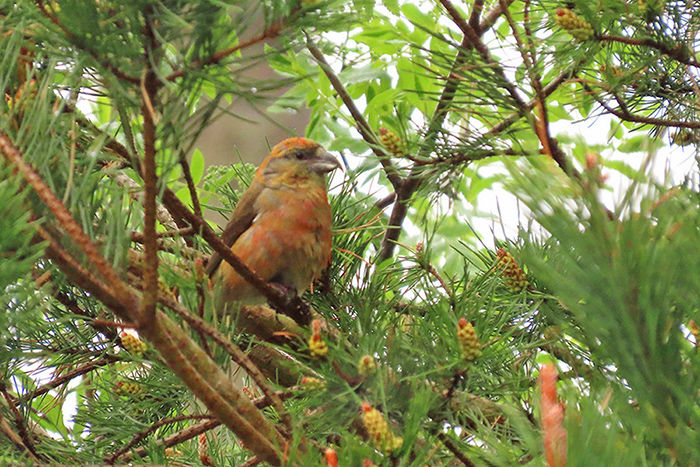
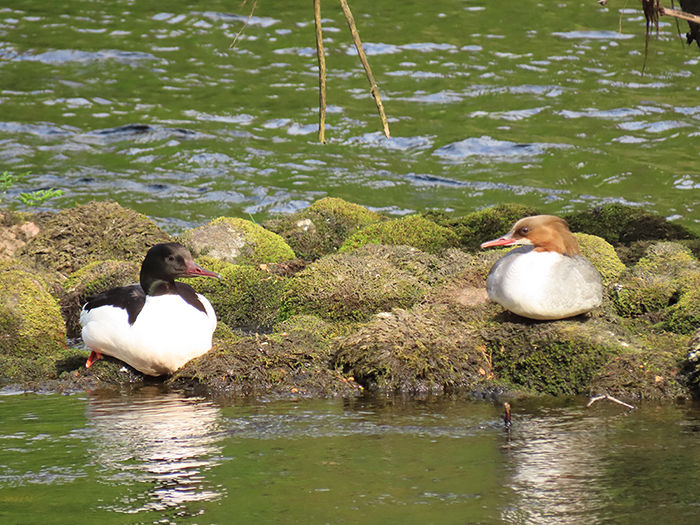
On another day I was helping with an ID course, and for this, I drove the group around different areas of the national park to see what we could find. We first drove to an area of pine forest and were able to see Crossbills in some larches, as well as Coal Tits, Great Tits, Treecreepers and some Pine Marten scat was found on the path. I later took the group to a loch where we managed to find Tufted Ducks, Goldeneyes, a Goosander, Mallards, Mute Swans, a Curlew, Sand Martins - which would have not longed arrived from further south and best of all, a female Long Tailed Duck, which would normally be seen on the coast instead of in freshwater lochs, a Ringed Plover - which would also normally be on sandy and rocky seashores, and two Red Throated Divers in breeding plumage.


We went to an area of marshes and managed to see more Tufted Ducks, Teal, a Grey Heron, Whooper Swans and some Red Kites flying over the landscape. Seeing all those things capped off an amazing day out and hopefully with more summer visitors coming, April will be just as good.

If you would like to go on one of our Day Guides go to: http://bit.ly/sw_DG


I see that the reasoning follows a coherent logical sequence. All conclusions are traceable back to solid evidence. The website offers broader contextual framing for the problem. Participation flows are illustrated by platform-based service models.