Day Guiding Blog May 2026

May is one of our busiest months for day guiding in Speyside, and for good reason. It is when the wildlife reaches its peak, alongside June. The summer visitors have all returned and the breeding season is well underway.
One of my day guides began in an area of birch woodland, looking for Wood Warblers, Tree Pipits and Pied Flycatchers. We managed to see two Wood Warblers carrying nesting material, confirming they had returned to breed in the area this year. Pied Flycatcher was heard but not seen and, with nothing new turning up, we moved on to a pine forest where we managed to see Crested Tit. Overall, it was a very successful day, with most of the local specialities found.


Another day guide involved taking two guests into a corrie in the hope of seeing Ptarmigan. The wind speed on the summit of Cairngorm meant we had to abandon the idea of travelling up by Funicular.
Our first stop was a car park overlooking moorland where Black Grouse can often be seen. There were none on show, but we did manage to find a Red Grouse instead, the only one of the day and naturally scarcer in places where they are not managed for shooting. This individual was a male, recognisable by its reddish plumage and broad red eyebrows.

Afterwards, we walked into the corrie, seeing Meadow Pipits, a Common Wheatear and plants such as Fir Clubmoss, Interrupted Clubmoss, Alpine Clubmoss, Ling Heather, Cross Leaved Heath and Trailing Azalea. None of these plants were in flower. Normally, the mountains have a good selection of flowering plants by May, but the bouts of cold, snowy weather seemed to have delayed things.


Once in the corrie, we crossed a boulder field and sat beside a tarn for lunch. We could hear Ptarmigan croaking but, despite my best efforts, none could be located. As we walked around the tarn, two Ravens appeared overhead, mobbing a smaller bird of prey, either a Peregrine, Merlin or Kestrel. It was visible only briefly before the Ravens chased it away.
At one point, the Ravens flew low overhead to investigate us and proved to be the most visible birds we could find. I also heard a Snow Bunting briefly, but was unable to locate it. Once back at the visitor centre, we managed a fleeting view of a Ring Ouzel as it flew across the mountainside. It was a long day, but the guests were pleased with what we had found.
Another day involved taking a guest to the Black Isle. We headed straight to Chanonry Point, where two Bottlenose Dolphins were seen, along with Gannets, Guillemots, Razorbills, Kittiwakes, Greater Black Backed Gulls, Herring Gulls and a Common Seal.

When nothing else could be found there, we moved on to Udale Bay. Despite the low spring tide, there were surprisingly few waders. A few Curlews were present, along with Shelducks and a large flock of Pink Footed Geese. This was a surprise, as I had expected them to have already headed north to breed. Linnets, Reed Buntings and a Common Whitethroat were also seen in the surrounding farmland.
We then stopped at another lay-by, where Red Throated Divers and Greater Scaup were seen distantly before returning to Chanonry Point. By that stage, the tide was predicted to be ideal for Dolphin activity. We added Arctic Tern and Sandwich Tern to the list, along with both Grey Seal and Common Seal. Sadly, no Dolphins appeared, so it was fortunate that we had seen them earlier in the day.

Afterwards, we visited North Kessock in search of Otters. None were found, but a Whimbrel provided some consolation. Apart from the lack of Otters, it was a successful day and my guest was very happy.

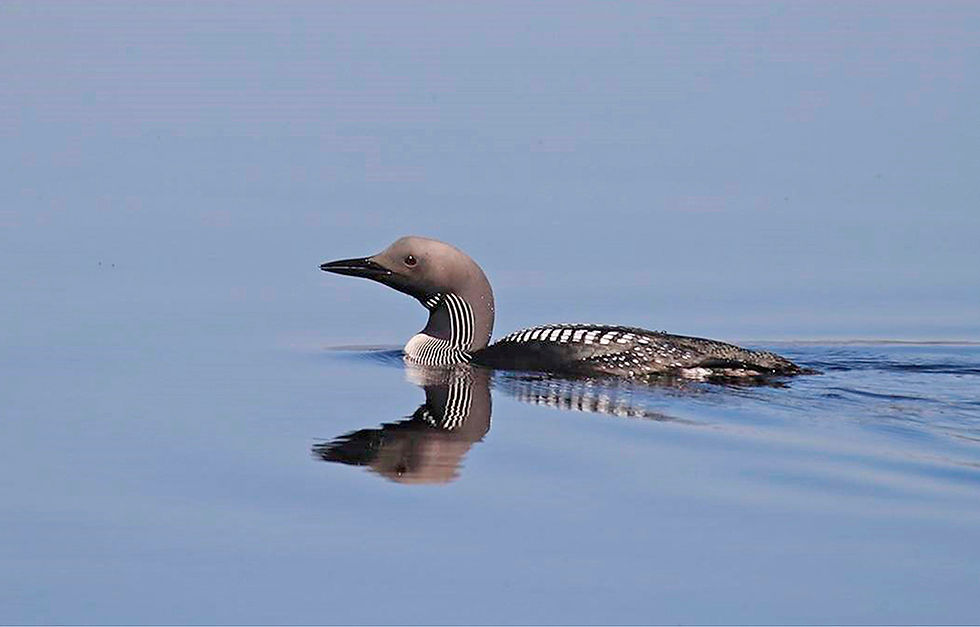
On another day guide within the Cairngorms National Park, I took guests to one of the local Black Grouse lek sites, where we enjoyed good views. We also saw Red Grouse, a Black Throated Diver, five Red Squirrels and, on the journey back out, four Mountain Hares.


From there, we drove to a valley where we saw Red Legged Partridges, Golden Plovers, a Kestrel and several Buzzards. Three immature White Tailed Eagles were soaring high overhead, looking enormous compared with the Red Kites mobbing them. We recorded eleven Red Kites during the day. We also managed a brief sighting of a Golden Eagle flying across one of the mountainsides.


We ended the day with a visit to a pine forest where we saw Siskins, a Cuckoo, Chaffinches and a Crested Tit. All in all, it was a very satisfying day for everyone involved.
If you would like to join one of our Day Guides, visit http://bit.ly/sw_DG to book your place.


Comments